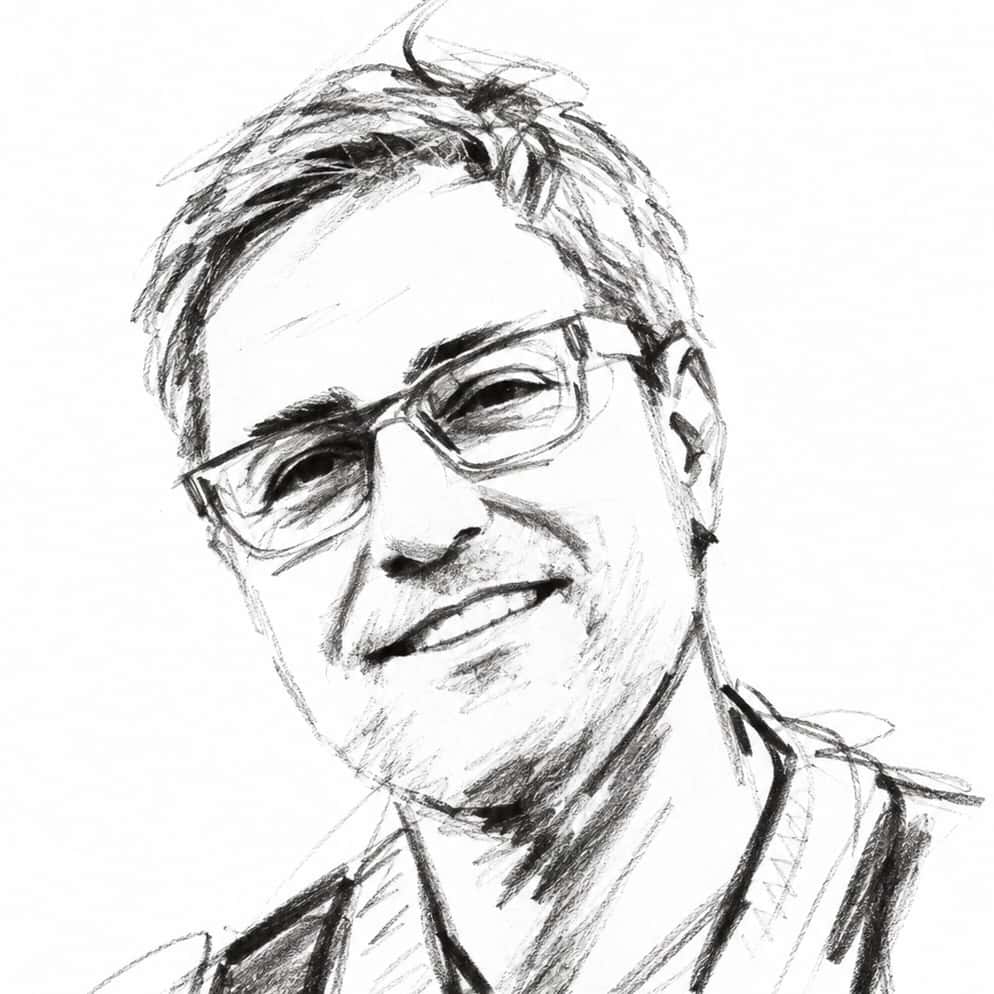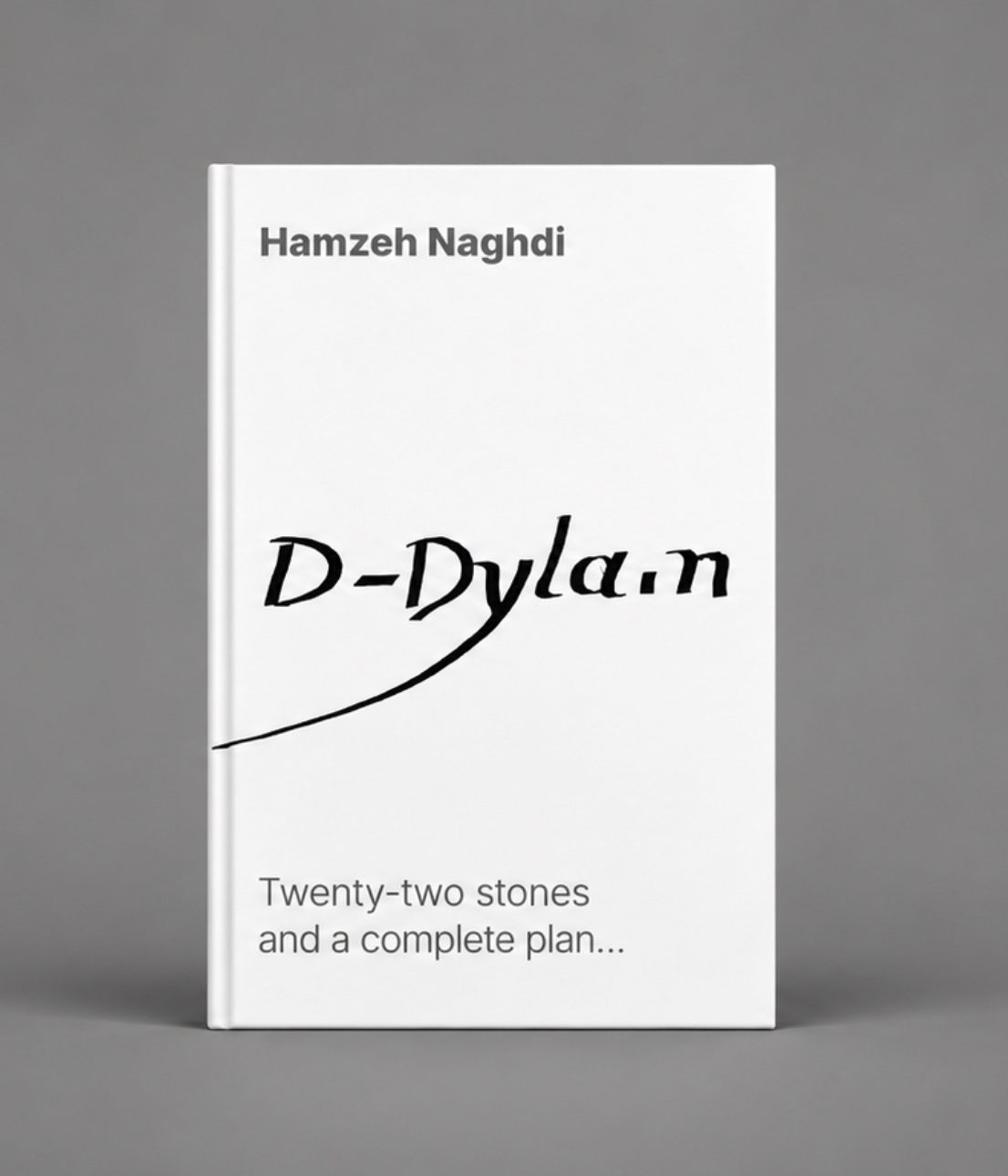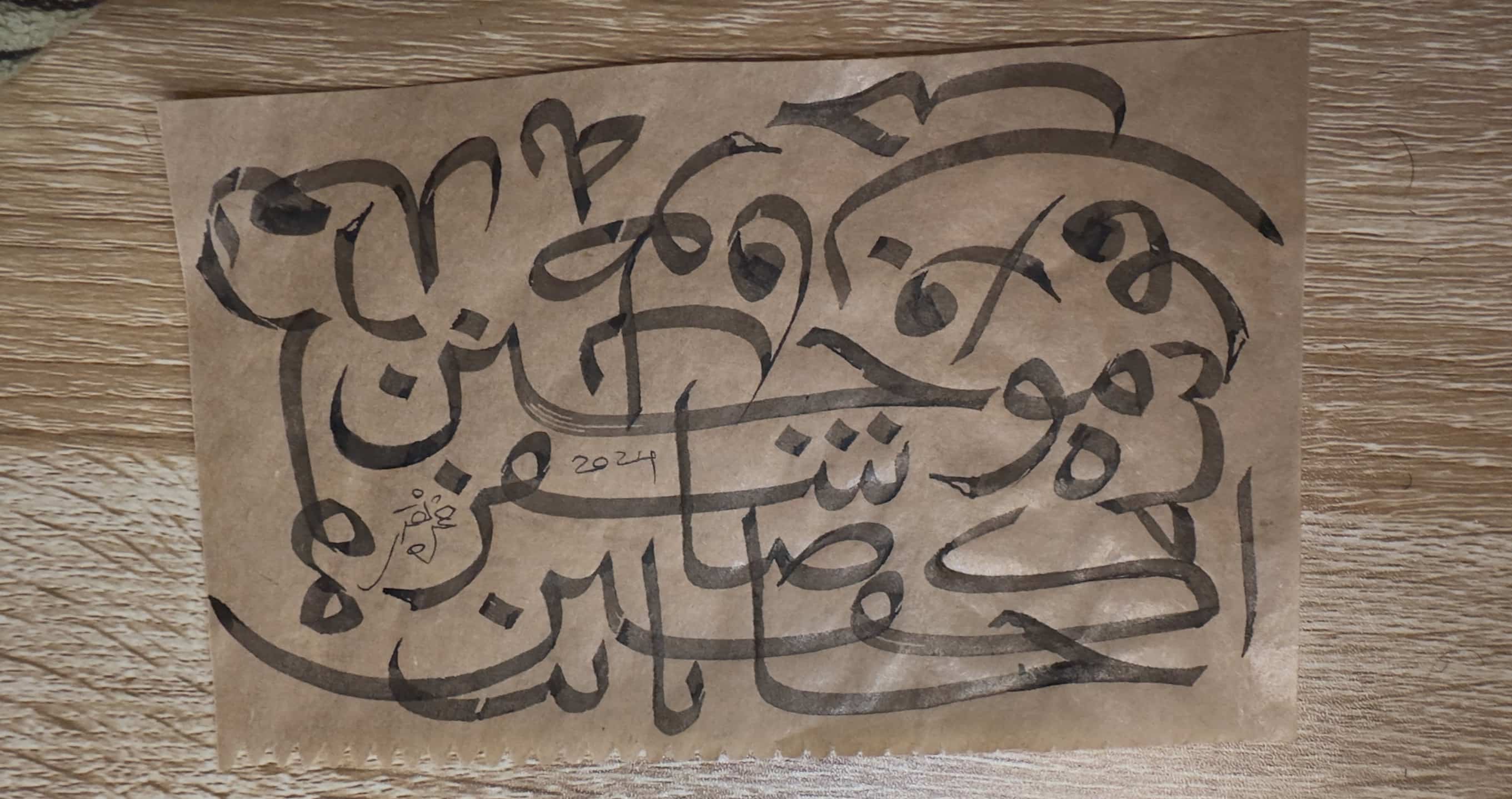
He is an Iranian-Australian calligrapher and type designer.
He began studying Persian calligraphy seriously at the age of ten. What started with the discipline of individual letters gradually became a lifelong study of proportion, rhythm, space, and the relationship between a word and its form.
In 2003, he became a member of the Iranian Calligraphists Association and received his professional qualification in Persian calligraphy. He later studied under Abdolsamad Samadi, concentrating on the techniques and principles required for writing the Qur’an in Persian Naskh calligraphy.
In his thirties, he began the work that would occupy the next decade of his life: writing the complete Qur’an by hand in Persian Naskh script. The project required the treatment of the Qur’an not as a collection of separate calligraphic pieces, but as a complete book, with consistency maintained from the first page to the last.
The completed work was formally presented in Iran in 2011. Pages from his Qur’an have also entered the collection of the International Museum of the Holy Qur’an in Tehran.
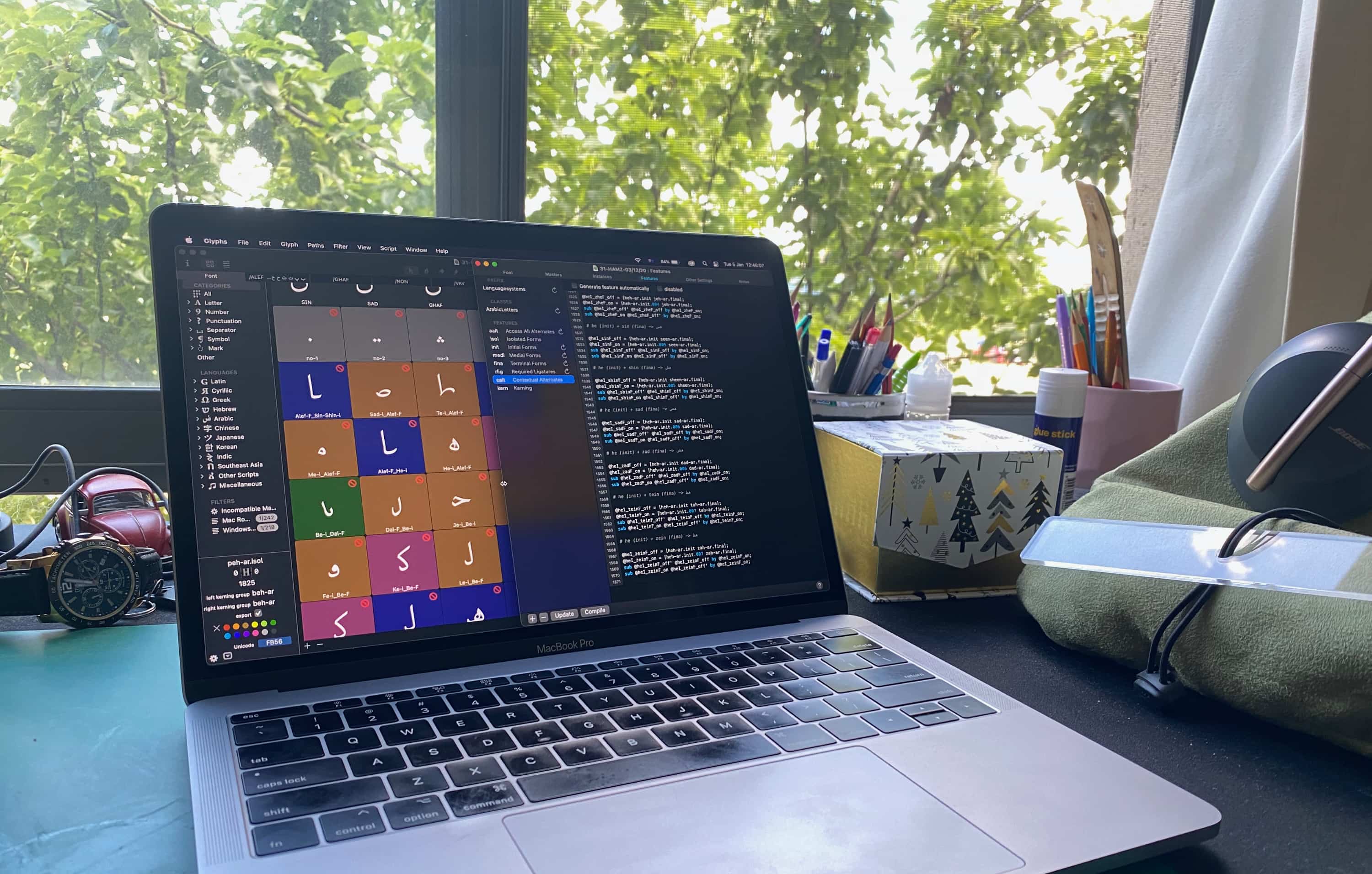
His work with letterforms later extended into type design. Moving from the handwritten letter to the digital one, he began designing Persian typefaces while retaining the proportions and visual relationships he had studied through calligraphy.
For Hamzeh, calligraphy and type design are two forms of the same enquiry: how much can be carried by the shape of a letter before it becomes a word.
He is an Iranian-Australian graphic designer.
He began working professionally with books in his twenties. Over the following decade, he designed more than one hundred books, magazines, and catalogues, working across book design, typography, page composition, and visual identity.
His early professional work began with Hejrat Publishing, where he designed and laid out books and developed an increasing interest in typography and the relationship between text and page. He later became responsible for art and graphic design at the Centre for Translation of the Holy Qur’an.
Much of his work during this period was concerned with books as complete visual objects. Rather than treating the cover, typography, and interior pages as separate elements, he approached them as parts of a single structure, with each decision serving the text it carried.
In 2002, his design work received first place and the Superior National Award at the Isfahan Book Fair, recognising work that included the biannual journal of the Centre for Translation of the Holy Qur’an and Hadis-e-Zendegi.
By his thirties, his attention had moved increasingly from designing around words to forming the words themselves. Graphic design gave way to calligraphy, but the years spent designing books remained part of the way he understood the page.
Read more about Hamzeh Naghdi and his work as a novelist.